 AgentSky
One API for agents. Browser UI included.
Run agents such as Claude Code, Codex, and Hermes in the cloud through one API. Send them work, stream their responses, and continue the conversation in a ready-to-use browser UI.
What does the API do?
AgentSky lets you use agents like Claude Code, Codex, and Hermes—or build your own products on top of them—through one API.
Use agents to get work done. Send tasks from your scripts, services, or workflows. Agents can use tools, work with files, and continue a conversation with context. A browser UI is included, so you can also work with agents directly, review their responses, and give follow-up instructions.
Build on top of agents. Bring these capabilities into your own application. Create custom agent experiences, connect your tools and data, and build workflows around your users’ needs. The API gives you control over agent configuration, sessions, messages, and event streams.
AgentSky hosts the runtime. You can start with the included browser UI, build your own interface, or use both with the same agents and sessions.
A working UI comes with it
You do not need to build a chat interface to start using your agent. AgentSky includes a browser UI where you can try agents, follow conversations, and provide more direction.
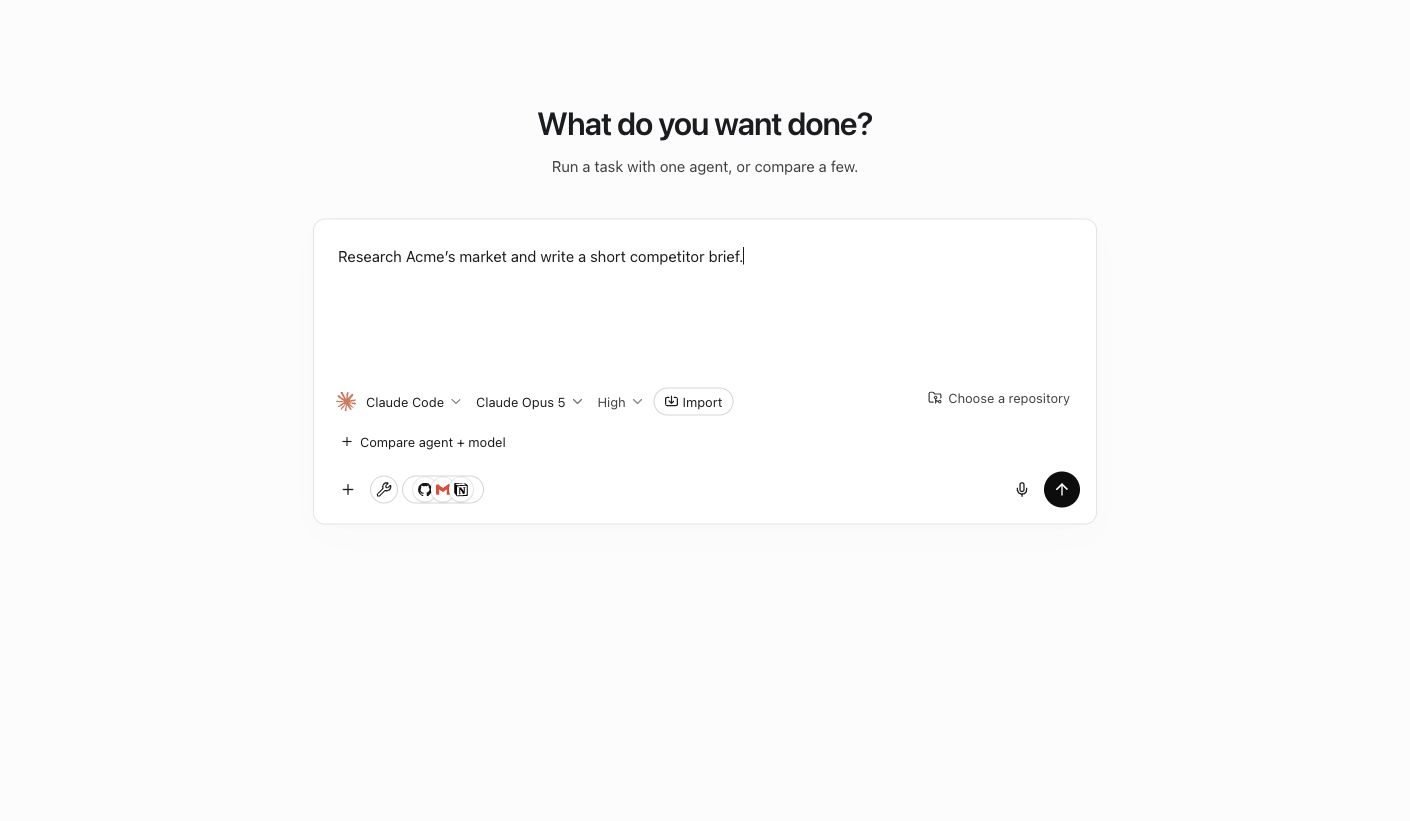
The included browser UI, shown with an example task ready to send. Choose an agent and model, attach files, and configure tools from the composer.
The API and the browser UI work with the same underlying agents and sessions. Work started through the API can be opened in the browser by an account with access to that session. A follow-up continues that session's conversation.
For example, a research workflow can move between code and a person:
- Your application starts the work. Send an agent a request to research a company.
- You review it in the browser. Open the same session and read its findings.
- You continue the conversation. Ask it to compare another company or expand a section, without starting over.
Use the included UI while you develop and operate your integration, or build your own interface on top of the API and event stream. The included UI is AgentSky's hosted browser application.
What can you build?
| What you want to build | How AgentSky helps |
|---|---|
| An agent inside your product | Send user requests to an agent and stream its responses into your application. |
| Research and reporting workflows | Give an agent instructions and access to the tools and files it needs, then ask follow-up questions in the same session. |
| Internal automation | Trigger work from your own scripts or services and read the results through the API. |
| Workflows with human participation | Start work programmatically, then use the browser UI to review the conversation and add direction. |
What an agent can do depends on its harness, model, configured capabilities, and permissions. Explore capabilities and reusable skills.
Understand agents and sessions
An agent is the configuration you reuse. It defines the harness, instructions, and capabilities for the work you want it to do.
A session is a continuing conversation with that agent. It holds the working context and history. Send related requests to the same session to build on earlier work; create a new session for a separate conversation.
Messages and activity travel as events. Your application sends a message and listens to the session's event stream for responses and status updates. The quickstart shows the existing send-and-listen commands.
Start with the path that fits
- Quickstart: launch your first agent from the terminal and talk to it over HTTP.
- API reference: explore endpoints, authentication, request formats, and session events.
- CLI reference: manage agents and sessions from your terminal.
- agent.toml: configure an agent in a declarative file.